10 Best Residential Doors for Global Buyers?
(866) 440-8136 Open 9am - 6:30pm EST on Mon - Fri or 10am - 4pm EST on Sat Showroom Locations

We ship across the U.S. and Canada. Visit our showrooms in Atlanta, Tampa and Naples and Nashville!

10 Best Residential Doors for Global Buyers?

Choosing residential doors for an international home requires more than comparing colors and prices. Climate, security, maintenance, insulation, and installation quality can change the buying decision. A door that performs well in a dry coastal town may swell in a humid tropical region. Small details matter.

Gary Johnson, a longtime door and window industry specialist, offers a useful principle: “Performance must come before appearance.” That idea guides this review of the 10 best residential doors for global buyers. Each option is considered through practical experience, including material durability, weather resistance, energy performance, hardware reliability, and design flexibility. Steel doors may provide strong security, while fiberglass models often balance insulation and low maintenance. Solid wood can create warmth and character, but it needs careful finishing and regular inspection.

There is no perfect door.

Regional construction methods also deserve attention. A beautiful door may fail when its frame, hinges, threshold, or seal does not match the building. Buyers should check product documentation, warranty terms, test results, and qualified installation support before ordering. Local conditions can expose weaknesses that showroom lighting hides.

This guide is not a universal ranking. It is a practical comparison for homeowners, architects, developers, and property managers. Some choices may cost more initially, yet reduce repairs over time. Others look attractive but demand more maintenance than expected. That trade-off is easy to overlook. By examining real-world performance alongside appearance, global buyers can choose residential doors with greater confidence and fewer expensive surprises.
10 Best Residential Doors for Global Buyers?

What Makes a Residential Door Suitable for Global Buyers

What Makes a Residential Door Suitable for Global Buyers

A suitable residential door must respond to climate, construction methods, and daily use. Buildings accounted for 34% of global energy demand in 2022, according to UNEP’s 2023 Global Status Report for Buildings and Construction. Therefore, an exterior door needs more than an attractive surface. Its insulation value, weather seals, frame design, and installation quality directly affect indoor comfort.

Climate changes the specification. In humid regions, corrosion-resistant hardware and moisture-stable materials matter. In cold areas, insulated cores and low air leakage reduce drafts. High-wind locations require tested structural performance. Look for documented U-values, air-leakage results, water resistance, and pressure ratings. These figures should follow recognized testing standards, not vague sales language.

No door is perfect.

Security also needs practical judgment. A strong cylinder, reinforced strike area, laminated glazing, and correctly anchored hinges can improve resistance. Yet an overcomplicated lock may frustrate older residents or emergency access. Accessibility matters globally, especially where homes serve multiple generations.

The International Energy Agency reports that buildings remain a major source of energy demand, so durable doors can support longer replacement cycles and lower material waste. I would still inspect local repair skills before choosing advanced systems. A technically excellent door becomes a poor investment when replacement parts are unavailable.

Top Residential Door Types by Material, Design, and Performance

10 Best Residential Doors for Global Buyers

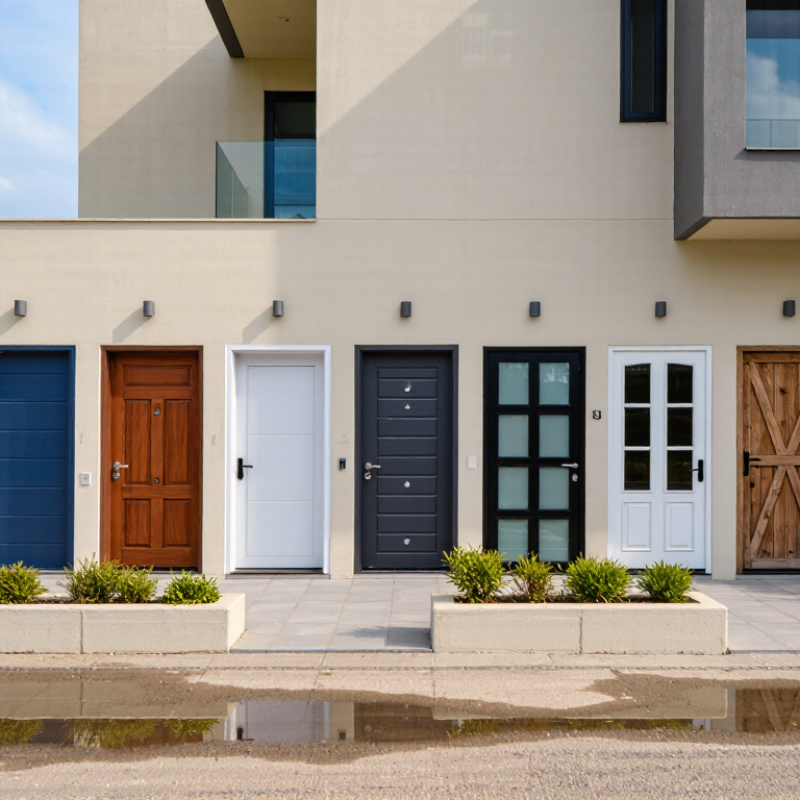
Residential doors should match climate, security needs, daily use, and architectural style. The best choices are not identical for every home. Solid wood offers warmth, strength, and natural grain, but it needs regular sealing in humid regions. Engineered wood provides better dimensional stability. Fiberglass resists moisture and dents. Steel delivers strong security, although scratches may develop rust if ignored. Aluminum is lightweight and suits modern homes. Composite doors balance durability and insulation. PVC doors are practical in wet environments. Glass doors bring daylight, but require privacy planning.

Design also affects performance. A traditional panel door suits classic façades, while a flush door creates a clean appearance. Pivot doors make a dramatic entrance, yet they need accurate structural support. Sliding doors save space and connect rooms to patios, but their tracks require frequent cleaning. Among these ten options, performance depends on more than material. Check thermal insulation, weather seals, hinges, locking points, drainage, and opening direction. A beautiful door can still perform poorly when installed unevenly. That detail is often underestimated.

Tips: Measure the opening in three places. Compare the results before ordering. Ask for tested insulation and air-leakage data. In coastal areas, choose corrosion-resistant hardware. For busy homes, select scratch-resistant surfaces and replaceable seals. Do not judge quality by weight alone. A lighter door may operate better, but cheaper hardware can become a costly weakness.

Best Residential Doors for Different Climates and Security Needs

Choosing the best residential door depends on climate, exposure, and security needs. The International Energy Agency reports that buildings consume about 30% of global final energy. A poorly sealed entry door can undermine an otherwise efficient home. The U.S. Department of Energy notes that air leakage may represent up to 30% of heating and cooling energy use. Look for insulated cores, continuous weatherstripping, and adjustable thresholds.

In hot, humid regions, fiberglass or treated composite doors resist moisture better than untreated timber. In cold climates, insulated steel or composite systems can reduce drafts, but thermal bridging around the frame remains a common mistake. Coastal buyers should specify corrosion-resistant hardware and drainage channels. High-wind regions need tested assemblies, not merely heavy panels. Standards such as ASTM E1886 and E1996 evaluate resistance to windborne debris.

Security requires more than a thick door. A reinforced frame, multi-point locking, laminated glazing, and protected hinges create layered resistance. European standard EN 1627 classifies door resistance from RC1 to RC6, although local requirements and building design still matter. In practical installations, I have seen expensive doors perform poorly because installers ignored the sill or wall connection. That is uncomfortable, but important. Climate data also changes over time, so historic weather averages may not be enough. Review current wind, rainfall, and temperature records before selecting materials.

10 Best Residential Doors for Global Buyers? - Best Residential Doors for Different Climates and Security Needs
Rank Residential Door Type Best Climate Security Profile Typical Construction Thermal Performance Weather Resistance Maintenance Best Use Case
1 Insulated Steel Entry Door Cold, windy, and mixed climates High when fitted with a reinforced frame, multi-point lock, and laminated glazing Galvanized steel skins around a foam-insulated core Very good; the insulated core reduces heat transfer through the door panel Very good with a durable coating and properly sealed edges; exposed scratches should be repaired to limit corrosion Low Front entrances requiring strong security, durability, and good energy efficiency
2 Fiberglass-Composite Entry Door Humid, coastal, hot, and mixed climates High with a reinforced core, strong hinges, and a tested locking system Fiberglass-reinforced skins over a polyurethane or similar insulated core Very good; typically more dimensionally stable than solid wood Excellent resistance to moisture, salt air, insects, and everyday temperature changes Low Homes needing a wood-like appearance with lower swelling, warping, and corrosion risk
3 Thermally Broken Aluminum Door Hot, humid, coastal, and modern urban climates High when combined with reinforced profiles, secure cylinders, and multi-point locking Powder-coated aluminum frames with a thermal barrier and insulated glass or panel inserts Good to very good; the thermal break limits heat flow through the metal frame Excellent resistance to rot, insects, and moisture; powder coating helps protect against corrosion Low Large glazed entrances, contemporary homes, and areas exposed to humidity or salt air
4 Solid Hardwood Door Dry or moderate climates Medium to high depending on thickness, frame strength, hinges, and lock hardware Seasoned hardwood panels, often built with engineered rails and stiles for stability Moderate; performance depends heavily on thickness, weather seals, and the surrounding frame Moderate; requires regular sealing or refinishing, especially in wet or highly exposed locations Medium to high Traditional architecture, premium interiors, and buyers prioritizing natural material and repairability
5 Engineered Wood Door Mixed, cool, and moderately humid climates Medium to high with a solid or reinforced core and quality locking hardware Layered wood products or composite wood cores with hardwood veneers or exterior skins Good; engineered layers generally offer better dimensional stability than a single solid-wood slab Good when factory-finished and protected from prolonged standing water Medium Buyers seeking a wood appearance with improved stability and more consistent construction
6 uPVC Multi-Point Door Cool, rainy, humid, and moderate climates Medium to high with steel reinforcement, a multi-point lock, and security-rated hardware Multi-chamber uPVC profiles with steel reinforcement and insulated panels or glazing Very good; multi-chamber profiles and compression seals help reduce drafts Excellent resistance to moisture, rot, and insects; extreme heat may increase expansion if poorly installed Low Energy-conscious homes where low maintenance and reliable weather sealing are priorities
7 Impact-Rated Exterior Door Hurricane-prone and severe-storm regions Very high when tested as a complete door assembly with frame, glass, and hardware Reinforced fiberglass, steel, or aluminum construction with impact-resistant glazing where applicable Good to very good; insulated versions can provide strong thermal performance Excellent resistance to wind-driven rain and flying debris when installed to the tested specification Low to medium Coastal properties and homes exposed to hurricanes, cyclones, typhoons, or severe windstorms
8 Security Steel Door Urban, high-risk, and mixed climates Very high with a reinforced frame, anti-pry hinges, protected cylinder, and tested lockset Heavy-gauge steel leaf, internal reinforcement, and a steel frame; insulation varies by model Moderate to good; insulated versions perform better than uninsulated hollow steel doors Good when corrosion protection and drainage are correctly specified; coatings need inspection over time Low to medium Primary entrances where forced-entry resistance is more important than a lightweight design
9 Insulated Glass Patio Door Moderate, warm, and light-filled interiors Medium; laminated glass, anti-lift devices, and multi-point locks improve protection Sliding or hinged frame with double insulating glass; frame may be aluminum, uPVC, fiberglass, or wood Good with low-emissivity double glazing and insulated frames; weaker configurations can lose more heat Good when tracks, rollers, seals, and drainage are maintained and correctly installed Medium Rear elevations, balconies, gardens, and rooms requiring daylight and outdoor access
10 Louvered or Ventilated Exterior Door Hot climates with cross-ventilation needs Low to medium unless paired with a separate security grille or reinforced outer door Wood, aluminum, steel, or composite frame with fixed or adjustable ventilation slats Low to moderate because ventilation openings reduce airtightness and insulation Good in suitable materials; aluminum and treated composite options are better for humid locations Low to medium Warm regions where airflow is important and the entrance is protected by a secure secondary barrier

Key Features, Certifications, and Standards to Compare Worldwide

For global buyers, the “10 best” residential doors should be compared by verified performance, not appearance alone. Start with thermal transmittance, air leakage, water resistance, security, and fire rating. The International Energy Agency reports that buildings used about 30% of global final energy in 2022. A poorly sealed entrance can undermine an otherwise efficient home. Ask for tested U-values, laboratory conditions, and installation limits. Numbers need context.

Certifications should match the destination market. EN 14351-1 supports performance assessment for external doors in European systems. NFRC procedures help verify thermal ratings in North America. ASTM tests may cover forced-entry resistance, water penetration, or air infiltration. Look for traceable test reports, product identification, and certification dates. ISO 9001 can indicate controlled manufacturing, but it does not prove that every door performs well. That distinction is often missed.

Tips: Compare the complete door set, including frame, threshold, seals, glass, hinges, and locking hardware. Check whether certificates cover the exact size and configuration you will buy. Ask how salt air, humidity, freezing temperatures, or intense sunlight affect materials. A steel door may resist impact, while a composite door may reduce maintenance. Neither is automatically superior. My practical concern is installation: even a certified door can leak through a badly prepared opening. Recheck local building requirements before ordering, because standards and climate assumptions differ widely.

10 Residential Door Types for Global Buyers

Typical thermal transmittance comparison for door leaves and frame systems

Lower U-values indicate better thermal insulation. The values shown are representative ranges for common residential door constructions; actual performance depends on the complete door-and-frame assembly, glazing, dimensions, installation, and test method. Buyers should compare results certified or tested under applicable standards such as EN 14351-1, ISO 10077-1, NFRC 100, or local equivalents.

How to Select the Right Residential Door for Your Property

Selecting the right residential door begins with the property, not the showroom display. Measure the opening, wall thickness, threshold, and available swing area before comparing designs. A beautiful door can still be wrong.

Climate matters. In humid coastal areas, choose materials and finishes that resist moisture and corrosion. In cold regions, inspect the core, weather seals, and thermal performance. Strong afternoon sun can fade dark surfaces and increase indoor heat. Local installers can explain which options perform well in actual weather, rather than relying only on product brochures.

Security should feel practical, not excessive. Check the frame strength, hinge protection, cylinder quality, and locking points. For glazed doors, consider laminated or impact-resistant glass where appropriate. Visibility also affects comfort. A narrow panel beside the door may brighten a hallway, but it can reduce privacy without suitable screening.


Think about daily movement. A wide entrance helps with furniture, luggage, and accessibility. Outward or inward opening may depend on the porch, climate, and local building requirements. Do not ignore maintenance. Timber needs more attention than many buyers expect, while metal can still suffer from poor drainage or damaged coatings. On-site drainage is often overlooked.

Ask for installation details, warranty limits, replacement-part access, and performance testing. These questions expose weak planning early. I would also leave room for doubt: advertised ratings may not reflect poor fitting. Even a high-quality door can leak air when the threshold is uneven. Get the opening checked again before ordering.