
2026 Best Quartzite for Countertops Which Should You Choose?
(866) 440-8136 Open 9am - 6:30pm EST on Mon - Fri or 10am - 4pm EST on Sat Showroom Locations

We ship across the U.S. and Canada. Visit our showrooms in Atlanta, Tampa and Naples and Nashville!

2026 Best Quartzite for Countertops Which Should You Choose?

Choosing the best quartzite for countertops in 2026 requires more than admiring a dramatic white slab. Quartzite is a natural stone, created when sandstone changes under intense heat and pressure. Geologist Hobart M. King, PhD, describes it as “a nonfoliated metamorphic rock composed almost entirely of quartz.” That definition matters. It separates genuine quartzite from quartz-look materials and mislabeled soft stones.

Recent industry data gives useful context. The 2024 U.S. Houzz Kitchen Trends Study reported that 71% of renovating homeowners selected engineered quartz for countertops, while natural stone remained a strong premium choice. The 2025 NKBA Design Trends Report also identifies natural materials, expressive veining, and durable surfaces as continuing kitchen priorities. These reports show demand, but they do not make the decision for you. A busy family kitchen may need Taj Mahal quartzite with subtle movement and a practical finish. A darker countertop may hide crumbs, yet reveal fingerprints near the island.

The Natural Stone Institute recommends reviewing samples under your actual lighting and confirming fabrication requirements before purchase. Do that. Morning sunlight can change the slab completely. Ask your supplier for an independent absorption test, resin-treatment details, and written care instructions. Some sellers use “quartzite” loosely, and that creates expensive mistakes. Even experts can disagree when stones contain transitional minerals. Your best choice balances hardness, porosity, maintenance, budget, and personal taste—not just a showroom photograph. Truthfully, no slab is perfect.
2026 Best Quartzite for Countertops Which Should You Choose?

Quartzite Countertops: Definition, Formation, and Key Characteristics

Quartzite is a natural metamorphic rock, not engineered quartz. It begins as sandstone buried under intense heat and pressure. Over time, quartz grains recrystallize and lock together. This process creates a dense surface with distinctive veining, cloudy bands, or crystal flashes.

The Natural Stone Institute describes quartz-based stone as a durable dimension-stone category. ASTM C616 also covers quartz-based dimension stone specifications. The U.S. Geological Survey’s 2024 Mineral Commodity Summaries estimated U.S. dimension-stone sales at roughly 1.8 million metric tons in 2023. The figure shows a real, established stone industry, but it does not prove every slab performs equally.

True quartzite usually resists scratching, moderate heat, and daily kitchen wear. It still needs careful fabrication. Seams, sink cutouts, and unsupported overhangs remain vulnerable points. Some pale slabs sold as quartzite contain softer minerals or resemble marble. A petrographic report can reveal the difference. A simple scratch test is not enough.

In practice, I inspect the slab in daylight. I look for open pits, repaired fissures, and uneven polish. Dark stone may show fingerprints more clearly. Light stone can hide subtle staining until installation. Sealing requirements also vary. I would not promise maintenance-free performance. Ask for absorption data, care instructions, and a written fabrication warranty before choosing.

How to Compare Quartzite Durability, Hardness, and Heat Resistance

When choosing quartzite for countertops, durability starts with the stone’s structure, not its color.

True quartzite is usually very hard, often near 7 on the Mohs scale. It resists scratches from knives and daily cookware. However, natural slabs vary. Some contain softer minerals or weathered areas.

Look closely at the slab.

A fabricator should inspect veins, fissures, and thin edges before cutting. Ask for the stone’s technical data, including water absorption and abrasion performance. A small sample test can reveal more than a polished showroom surface. Try staining it with coffee, oil, and lemon juice, then clean each mark after several hours. This is not a perfect laboratory test, but it exposes practical weaknesses. Sealing improves stain resistance, yet it does not repair cracks or prevent careless maintenance.

Heat resistance needs a separate check. Quartzite generally handles brief contact with warm or hot cookware better than engineered surfaces containing resin. Still, sudden temperature changes can stress a slab. A cast-iron pan placed directly on a cold counter may cause damage, especially near a sink cutout or seam. Use trivets for repeated high heat. Experienced installers also reinforce long overhangs and vulnerable corners. I would not rely on hardness alone. A stone can resist scratching but chip at the edge. Ask to see an installed sample, not only a showroom piece. Even careful selections can disappoint when lighting changes the appearance of natural fissures.

Popular Quartzite Colors, Patterns, and Interior Design Styles

Quartzite offers more than a durable countertop surface. Its colors range from soft white and warm beige to charcoal, green, and blue-gray. White quartzite can brighten a small kitchen, while darker slabs create a grounded, dramatic mood. Look closely at the background tone before choosing cabinet colors. A cool white may clash with creamy flooring.

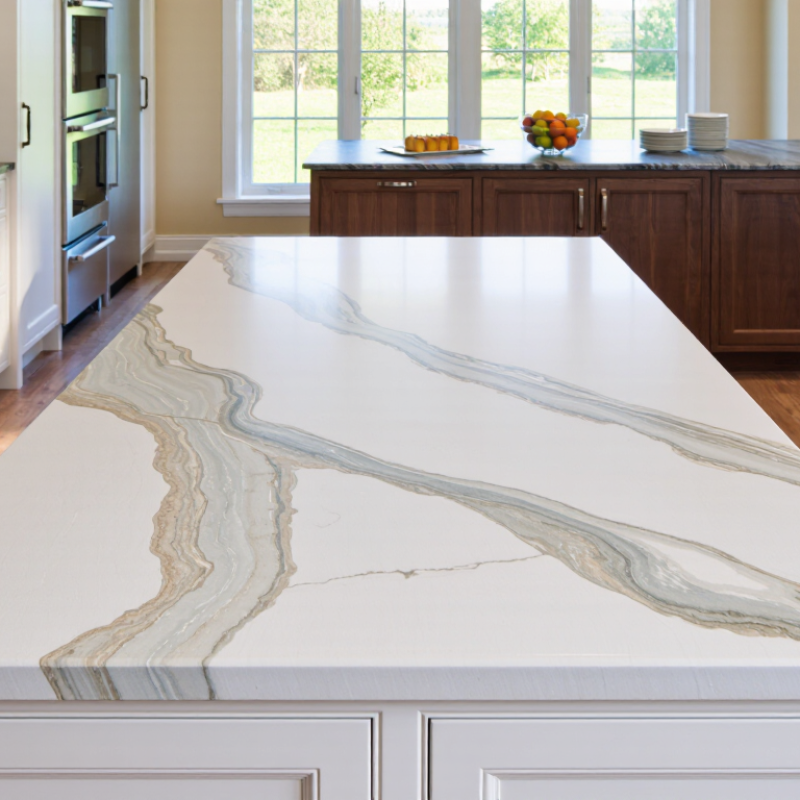
Pattern is often the deciding detail. Fine gray veins suit quiet Scandinavian or modern interiors. Bold gold movement feels richer in traditional, transitional, or Mediterranean rooms. Layered waves can support a dramatic contemporary kitchen, especially when the backsplash continues the slab. Always view the full slab. A small sample may hide a large vein or an unexpected color shift.

Quartzite is natural stone, so each surface is individual. Proper sealing helps resist staining, but it does not make the counter maintenance-free. Some stones contain more calcite and may react to acidic substances, despite being labeled quartzite. Ask for a professional identification and test a sample when possible. A practical mistake is choosing the most dramatic pattern without considering daily clutter. The result can feel restless. Softer movement is often easier to live with. Still, perfection is not required; a small variation may give the kitchen its character.

How to Choose the Best Quartzite for Your Countertop Needs

Choosing the best quartzite starts with your room, not a color chart. Study how the countertop will work each day. A busy kitchen needs strong resistance to heat, scratches, and spills. A lightly used vanity allows more flexibility.

Look at full slabs under natural light. Small samples can hide movement, veining, and darker areas. Check the surface for open pits, repaired cracks, or uneven polishing. Ask the fabricator where the strongest pattern should appear. This affects seams, islands, and waterfall edges. It also reduces surprises during installation.

Confirm that the stone is genuine quartzite. Some materials are labeled loosely, although their performance differs. Request technical information, including absorption and recommended maintenance. A qualified installer can explain sealing needs for that specific slab. Quartzite usually tolerates normal kitchen heat, but sudden temperature changes still deserve caution. Use trivets.

Color matters, but function matters more. Pale stones show stains less dramatically, while textured finishes may hold dust near cooking areas. Dark surfaces can reveal water marks quickly. I once underestimated how strongly morning light changed a gray slab; the installed color felt warmer than expected. That mistake taught me to inspect samples at several hours of the day.

Choose a finish you will maintain comfortably. Sealing is helpful, not magical. Wipe wine, oil, and acidic foods promptly. Ask for written care instructions. A dependable choice balances appearance, verified performance, fabrication quality, and your willingness to maintain it.

2026 Best Quartzite for Countertops: Which Should You Choose?

Quartzite is generally harder and more scratch-resistant than marble, while its porosity can vary by stone type and finish. The chart compares representative technical values for common countertop materials. Quartzite and granite typically offer strong durability, but every slab should be tested and sealed according to the fabricator’s recommendations.

Values shown are typical representative figures: Mohs hardness indicates scratch resistance, while water absorption is shown as a percentage by weight. Natural-stone values vary between slabs, so request the specific slab’s technical data before purchasing.

Quartzite Countertop Costs, Maintenance, and Installation Considerations

Quartzite countertop costs vary widely by stone quality, thickness, edge profile, and local labor. HomeAdvisor’s 2024 True Cost Guide places installed quartzite near $60–$120 per square foot. A 40-square-foot island could therefore exceed $4,800 before plumbing changes or demolition. Slab availability also affects pricing. Rare colors often require longer shipping.

Quartzite is natural stone, not engineered quartz. The Natural Stone Institute’s Dimension Stone Design Manual recommends evaluating absorption and stain resistance before sealing. Many fabricators suggest resealing periodically, but the correct interval depends on testing and daily use. Wipe coffee, wine, and oil quickly. Avoid abrasive powders and harsh acids. The surface feels tough, yet it is not invulnerable.

Installation needs more than a pretty slab. A qualified fabricator should inspect fissures, confirm cabinet support, and create a precise template. ASTM C97 testing can provide useful absorption data when a slab’s performance seems uncertain. Expect seams near sinks or long runs. They may be visible. That is normal, though disappointing for some homeowners. I would not choose solely from a small sample; lighting can change the slab dramatically. Houzz’s 2024 U.S. Kitchen Trends Study reports rising investment in major kitchen renovations, making accurate measurements and written allowances especially important. Get both before fabrication.

Article Source: