We ship across the U.S. and Canada. Visit our showrooms in Atlanta, Tampa and Naples and Nashville!
A glass door for front door can make an entryway feel brighter, larger, and more welcoming. Yet choosing one involves more than matching a frame to your home’s style. Glass affects privacy, heat, security, cleaning, and daily comfort. Small details matter.
A sunny hallway can become uncomfortably hot by noon. A clear panel may also reveal parcels, shoes, or family routines from the street. These practical concerns deserve the same attention as color and hardware. This guide presents seven useful tips based on common door-installation considerations and real household use. It examines glass type, energy performance, privacy levels, frame materials, security features, measurements, and maintenance.
Ask whether the glass is tempered or laminated. Check how the door seals against drafts. Professional advice can prevent expensive mistakes, especially when an existing opening is uneven or exposed to heavy rain. Reliable manufacturers should provide clear specifications, warranty terms, and installation guidance. Local building requirements may also influence safety glazing and entry-door design.
No single option suits every home. A beautiful door can still fail if it overheats the foyer or offers too little privacy. In practical evaluations, glass samples often look different under morning and evening light. That detail is easy to overlook. Use these tips to compare appearance with performance, then choose a glass door for front door that feels secure, practical, and comfortable through changing seasons.
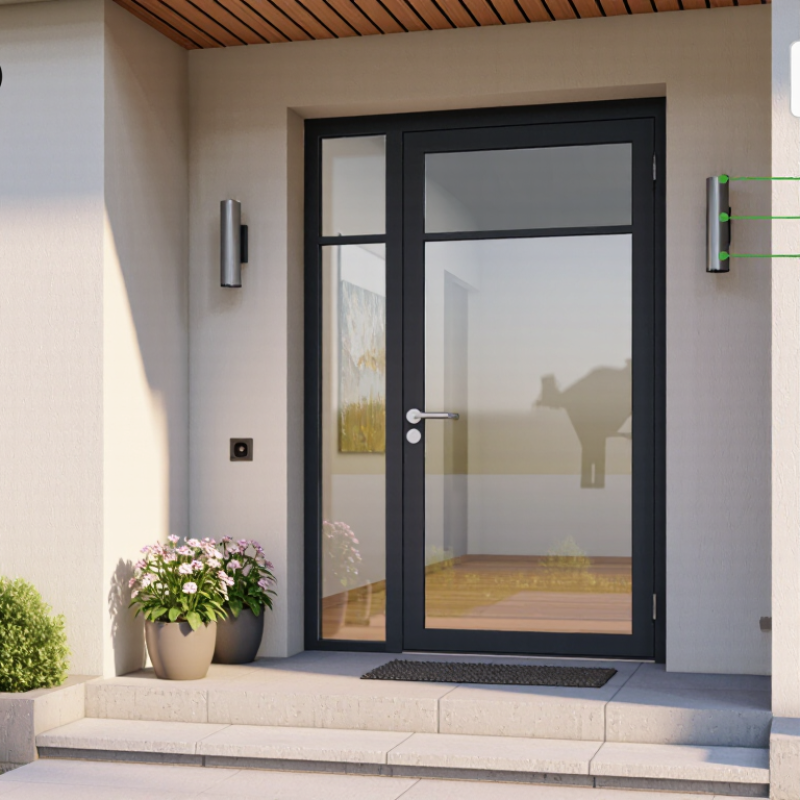
Choosing a glass front door begins with safety, not appearance. Tempered glass is typically four to five times stronger than annealed glass, according to technical guidance from the National Glass Association. Heat treatment compresses the surface, helping the panel resist everyday impacts, temperature changes, and pressure.
Still, tempered glass is not unbreakable. The U.S. Consumer Product Safety Commission’s 16 CFR Part 1201 requires safety glazing in hazardous locations, including many door panels and sidelites. ANSI Z97.1 also evaluates impact performance and breakage characteristics. Certified glass should carry permanent markings, so ask the installer to show them before fitting.
Look closely at the edges. Small chips can weaken tempered glass dramatically, especially near hinges, locks, or drilled holes. A professional installer should measure the opening, protect the edges, and use compatible setting blocks. I have seen attractive doors fail because installation damage was overlooked. That mistake is easy to prevent.
For exposed entrances, consider laminated safety glass as well. It can remain attached to an interlayer after cracking, while tempered glass usually breaks into small granules. This distinction matters during forced impact, storms, or accidental contact. Check the local glazing requirements and the manufacturer’s test documentation. Stronger is helpful, but verified performance matters more.
A glass front door should be attractive, but safety ratings matter more. ANSI Z97.1 and CPSC 16 CFR 1201 are key references for impact-resistant architectural glazing. ANSI Z97.1 uses Class A and Class B performance levels, with Class A requiring the stronger impact performance. Under CPSC 16 CFR 1201, Category II provides higher impact resistance than Category I. These ratings are not interchangeable. Confirm the exact marking before ordering.
Tips: 1. Ask for a permanent safety-glazing label. 2. Check both ANSI and CPSC references. 3. Confirm the rating matches the door’s size and location. 4. Request test documentation from the installer. 5. Avoid ordinary annealed glass near the entry path. 6. Inspect edges for chips or rough cuts. 7. Verify the frame and glass work as one tested system. A label alone may not prove proper installation.
The National Safety Council’s Injury Facts 2024 recorded 227,039 preventable injury deaths in the United States during 2022. That broad figure includes many hazards, not only glass, but it reinforces a practical point: small design choices deserve attention. I would also question vague claims such as “impact safe” without a standard number. Measure the opening twice. Review local building requirements. A professional installer should explain the rating, glass thickness, and replacement process in clear language. Mistakes happen, especially when appearance controls the decision.
Choosing a glass door for a front entrance starts with measurements, not appearance. A bright showroom sample can hide a costly fit problem.
Measure the rough opening at the top, middle, and bottom. Record width, height, and wall thickness separately. Use the smallest width and height when checking the door size.
Old openings are rarely perfectly square. I have seen differences of nearly half an inch between corners. That small error can affect installation.
Tip: Check the rough opening twice. Measure after removing trim if possible, because trim can conceal damaged framing or extra space. Confirm the sill is level, and inspect the floor below it. A threshold needs firm, continuous support. Soft wood or uneven tile may cause movement, leaks, or difficult operation.
Next, map the swing carefully.
Stand outside and note whether the door opens inward or outward. Mark the handle side on a simple sketch. Check nearby walls, steps, railings, furniture, and light fixtures.
Leave enough clearance for the moving panel and someone carrying groceries. Do not assume the existing swing is correct. It may have been chosen around an old obstruction.
Include flooring, mats, weather seals, and future floor coverings when checking threshold height. A few millimeters matter.
Ask a qualified installer to verify the final dimensions before ordering. Measure carefully, but question your first reading. That is useful.
A glass front door can make a narrow entry feel open, but its performance matters as much as its appearance. In practice, begin with the NFRC label, not only the glass pattern. The label provides tested values for U-factor, SHGC, and visible transmittance. These measurements offer a more reliable comparison than sales descriptions.
U-factor shows how quickly heat moves through the door. Lower is better. A low U-factor can help maintain indoor comfort during cold weather. SHGC measures how much solar heat enters through the glass. In a hot, sunny climate, a lower SHGC may reduce afternoon heat near the entrance. In a colder climate, moderate solar gain can sometimes be useful. Local direction matters. A west-facing door may receive harsh evening sun.
Visible transmittance, or VT, describes how much daylight passes through the glass. Higher VT can brighten a dark hallway, while lower VT may improve privacy. Frosted or patterned glass changes the visual result, even when its rating looks suitable. Light still matters.
Compare the whole door assembly, including the frame, weather seals, and glazing edges. A strong glass rating cannot correct a poorly fitted frame. Check for condensation risks in your climate, and ask how the unit was tested. I once focused too heavily on daylight and underestimated summer glare. That choice was comfortable on cloudy days, but less practical in July. Energy performance, privacy, orientation, and installation should be considered together.
| Tip | What to Check | Technical Information | Typical Reference Values | Practical Selection Guidance |
|---|---|---|---|---|
| 1 | NFRC U-Factor | The U-factor measures the rate of heat transfer through the complete fenestration product. It is commonly expressed in Btu/h·ft²·°F. A lower value indicates better insulation and reduced heat loss or heat gain. |
Typical center-of-glass ranges: Clear single glazing: 0.80–1.20 Clear double glazing: 0.45–0.60 Double low-emissivity glazing: 0.25–0.35 Triple low-emissivity glazing: 0.15–0.25 |
Choose the lowest practical U-factor for cold or mixed climates. Compare the whole-door NFRC value, not only the center-of-glass performance, because the frame, edge spacer, and door construction also affect efficiency. |
| 2 | Solar Heat Gain Coefficient (SHGC) | SHGC is the fraction of incident solar radiation admitted through the product as heat. It is expressed from 0 to 1. Lower SHGC reduces unwanted solar heat gain; higher SHGC allows more passive solar warmth. |
Common glazing ranges: Clear single glazing: 0.60–0.80 Clear double glazing: 0.55–0.70 Solar-control low-e glazing: 0.25–0.40 High-solar-gain low-e glazing: 0.45–0.60 |
Use a lower SHGC for hot climates, strong afternoon sun, or an entry facing south or west. A moderate or higher SHGC can be useful in colder climates when winter solar heat is desirable. |
| 3 | Visible Transmittance (VT) | VT indicates the percentage of visible light transmitted through the glazing, expressed from 0 to 1. Higher VT generally provides a brighter entry area, although tint, coatings, frits, and decorative glass can reduce daylight. |
Clear glazing: commonly 0.70–0.90 Low-e double glazing: commonly 0.55–0.75 Tinted or patterned glazing: often 0.20–0.60 |
Select higher VT when natural light is important. Balance VT with glare control and privacy; a higher VT does not automatically mean better thermal performance. |
| 4 | Compare the Three Values Together | U-factor, SHGC, and VT describe different performance characteristics. Improving one value may affect another depending on the glass composition and coating design. |
A balanced double low-e unit may offer approximately: U-factor: 0.25–0.35 SHGC: 0.25–0.60 VT: 0.55–0.75 |
Do not choose glass using VT or SHGC alone. For a sunny front entry, look for low U-factor, climate-appropriate SHGC, and enough VT to meet daylight preferences. |
| 5 | Choose the Right Glazing Construction | Double and triple glazing create insulating air spaces. Low-emissivity coatings reduce radiant heat transfer, while argon or krypton gas fills can improve insulation when properly sealed. |
Typical configurations include: Double glazing: two panes with one insulating space Triple glazing: three panes with two insulating spaces Low-e coating: designed for lower emissivity and improved thermal control |
Double low-e glazing is often a practical balance of efficiency, weight, cost, and light transmission. Consider triple glazing where very low heat transfer or severe winter conditions justify the added weight and cost. |
| 6 | Check Safety, Privacy, and Durability | Front-door glazing should be safety-rated where required by local code. Laminated glass helps retain broken fragments, while tempered glass is designed to break into smaller particles. Decorative textures, films, and frits can improve privacy. |
Relevant features may include: Safety glazing certification: required in some hazardous locations Laminated construction: improved post-breakage retention Tempered construction: increased resistance to thermal and mechanical stress Obscure glass: reduced visual clarity |
Verify local building-code requirements, especially for glass near the floor, locks, or door edges. Match privacy level to the entry location without unnecessarily sacrificing VT. |
| 7 | Evaluate the Complete Door System | Glass performance is only part of the result. Air leakage, frame material, weatherstripping, sill design, installation quality, and orientation can significantly affect comfort and energy use. |
Review the complete product information for: NFRC-certified U-factor and SHGC Air leakage rating, when available Frame and edge-of-glass construction Weatherstripping and sill details Installation and flashing requirements |
Prefer a product with documented whole-door ratings and a qualified installation. A high-performing glass unit can underperform if the frame is poorly insulated or the perimeter is not properly sealed. |
Note: The numerical ranges are representative industry ranges for common residential glazing constructions, not guarantees for a specific product. Actual NFRC values vary with pane thickness, coating position, gas fill, spacer, frame, door size, and certification method. Always compare the certified whole-door NFRC label and applicable local energy-code requirements.
7 Tips for Choosing a Glass Door for Your Front Door
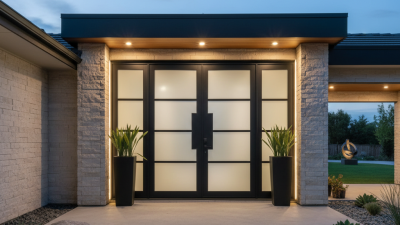
Tip 1: Start with privacy. Obscure glass softens outside views while still admitting daylight. However, it may reveal movement when indoor lights are bright. Tip 2: Check the glass texture in person. A sample can look private outdoors but feel surprisingly clear at night. Tip 3: Consider laminated safety glass for added resistance and reduced shattering risk.
Tip 4: Ask about Low-E coatings. They help control heat transfer, which can make the entryway more comfortable throughout the year. In sunny rooms, the coating may also reduce fading on nearby flooring. Tip 5: Match the coating to your climate and door direction. A technical rating matters more than attractive sales language. I have seen beautiful doors perform poorly after installation because the glass specification was overlooked.
Tip 6: Choose a multipoint lock that engages at several points along the frame. This can improve resistance and reduce drafts when the door is correctly aligned. Tip 7: Treat installation as part of security. Strong glass cannot compensate for loose hinges, weak framing, or an incorrect lock strike. Ask an experienced installer to inspect the threshold, weather seals, and latch alignment. Also, test the lock with the door both open and closed. Small gaps matter. A secure-looking door can still need adjustment.
Balance privacy, security, and energy performance by combining obscure glass, Low-E coatings, laminated construction, and multipoint locks. The scores below reflect practical performance priorities for a residential front entrance on a 1–5 scale.
Obscure or frosted glass improves privacy, laminated glass helps resist impact, Low-E coatings reduce heat transfer, and multipoint locks provide stronger resistance than a single-point lock.